The Children of Goshen helps families, schools and local authorities arrange part-time SEND tutoring, specialist mentoring, Functional Skills, sensory-room sessions and family support alongside the learner’s existing or locally arranged education package.
Start with what is happening now. You do not need to know the correct service name, SEND acronym or placement route before asking for help.
This explains the policy context behind our earlier, part-time support. Consultation proposals have not replaced existing SEND law or current rights.
Current position
Existing duties and rights remain in force.
The current SEND Code of Practice and EHCP framework continue.
Schools continue to have Equality Act duties, including reasonable adjustments for disabled pupils.
Schools and local authorities retain oversight and safeguarding responsibility for commissioned alternative provision.
Proposed reform
Earlier, layered support is the direction of travel.
Universal, Targeted, Targeted Plus and Specialist layers are proposed, with help available earlier.
Individual Support Plans are proposed as digital records of need and provision.
New legislation is not expected to start until September 2029; details remain subject to legislation.
Current consultation
Education Otherwise Than At School (EOTAS)
Open until 18 September 2026. The consultation asks how to provide earlier support, reduce delays, maintain connection to learning, support return to school where appropriate and use accredited online alternative provision safely. No final decisions have been made.
A school or local authority needs part-time SEND support
A commissioner needs a defined tutoring, mentoring or sensory-support intervention with a suitable practitioner, delivery plan and measurable review points.
commissioned SEND support · outreach · progress reporting
The Children of Goshen is a part-time SEND tutoring, mentoring, sensory and family-support provider working alongside a child’s school, college, home-education programme or local-authority-arranged education package.
01
Part-time support
Defined sessions with agreed hours, purpose, outcomes and review points—not a full-time replacement for school.
02
Alongside education
Support complements the learner’s school, college, home-education programme or local-authority-arranged package.
03
Specific service purpose
Tutoring, mentoring, Functional Skills, sensory support or family guidance is selected for an identified need.
04
Support within a wider arrangement
Where a learner receives alternative provision or EOTAS, we may deliver one agreed part of that wider package; we do not approve or replace it.
Our boundary is active, not just written. We monitor each learner’s hours, delivery pattern and education elsewhere. We do not provide all or substantially all of a compulsory-school-age child’s education. Requests that may amount to full-time education require an appropriate registered route and regulatory review.
Every support arrangement should answerWhat is being taught?Who is responsible?How will progress be reviewed?How does this fit the wider education plan?
Support matched to the educational need
Support matched to the learner.
Support is part-time and may complement a school, college, home-education, local-authority, EHCP or reintegration plan. Scope, hours and responsibilities are confirmed before delivery.
01
Part-time commissioned SEND support
Defined tutoring, mentoring or outreach sessions that work alongside the learner’s main education arrangement. Purpose, hours, responsibilities, outcomes and review points are agreed before delivery.
Targeted support · early intervention · reintegration02
Personalised SEND tuition
One-to-one or small-group teaching shaped around current attainment, communication, access needs, interests and barriers to learning.
Literacy · numeracy · curriculum access03
Mentoring and re-engagement
Consistent support to rebuild trust, participation, confidence, learning routines and readiness for education or training.
Engagement · attendance · confidence04
Functional Skills and preparation for adulthood
Practical English, maths, communication, problem-solving and decision-making linked to independence and sustainable post-16 destinations.
Functional Skills · independence · transition05
Sensory-informed learning
A calmer, adaptable environment used as part of an agreed educational, developmental or regulation-focused session—not presented as clinical treatment.
Sensory room · regulation · participation06
Parent guidance through The Village
Plain-language help to understand education routes, prepare for meetings, identify the right questions and connect with qualified legal, financial or community support where appropriate.
Parent support · workshops · signposting
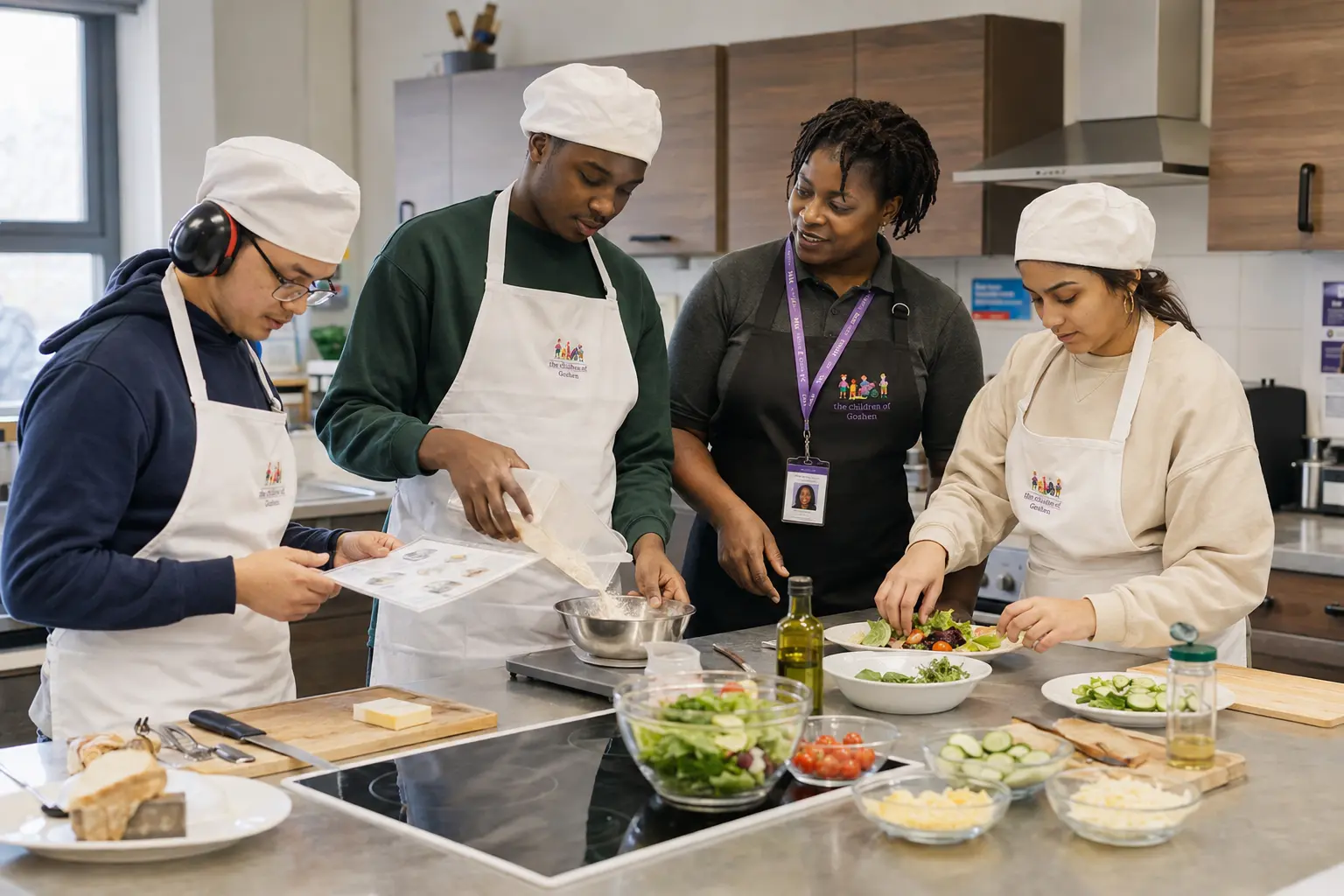
Targeted learningCurriculum access with an appropriate practitionerSensory-informed deliveryA calmer environment used for an agreed purposePreparation for adulthoodCooking, planning, numeracy and teamwork linked to greater independence
The learner journey
A clear support journey.
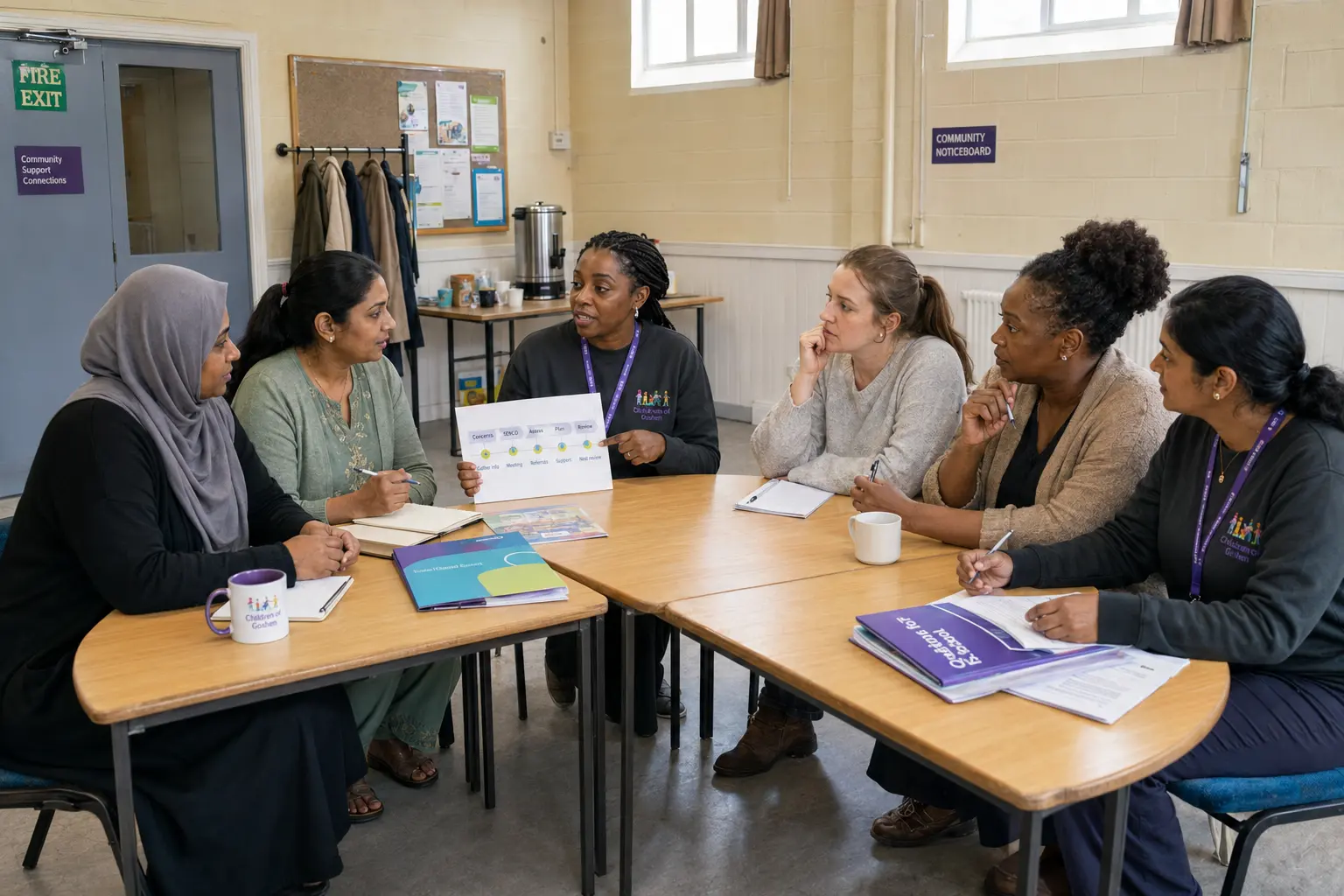
The journey follows the logic of the SEND Code of Practice: identify need, plan support, deliver it, review the evidence and adapt. Statutory, diagnostic and clinical assessments remain with the appropriately qualified bodies and professionals responsible for them.
01
Concern
Tell us what has changed: attendance, learning, behaviour, confidence, communication, regulation or placement stability.
A focused reason for referral
02
Information
Bring together the learner’s voice, family priorities, school information, current SEN support and relevant EHCP outcomes where available.
A clear starting point
03
Suitability
Consider needs, risks, safeguarding, setting, access, supervision, proposed hours and whether the service falls within our educational remit.
A suitability decision
04
Individual plan
Set intended outcomes, curriculum focus, reasonable adjustments, delivery frequency, review dates and evidence to be recorded.
An agreed support plan
05
Match and deliver
Match practitioner competence and experience to the work, then deliver in the agreed setting with professional boundaries and session records.
Structured educational support
06
Measure and review
Track attendance, engagement, work completed, skill development and feedback; review using an assess–plan–do–review cycle.
Evidence of progress and barriers
07
Next destination
Agree whether to adapt, continue, reintegrate, transition to another placement or prepare for education, training and employment.
A documented next step
Our Golden Rule
No support starts until the person, purpose, place, plan and protection are confirmed.
Safeguarding is the operating standard across every tutoring, mentoring, sensory-room and community-support service. Before delivery, we establish who is responsible, what will be provided, who will provide it, where it will happen, how information will be handled and how safety and progress will be reviewed.
One website statement is never enough.
Safeguarding, safer recruitment, DBS eligibility and checks, health and safety, fire safety, data protection, insurance, practitioner competence and commissioner due diligence are checked for the exact service and delivery environment.
A named safeguarding lead, current child-protection procedures, local referral routes, allegations and whistleblowing processes, and immediate escalation where a child may be at risk.
Written role requirements, identity and right-to-work checks, employment history, references, qualification checks, overseas checks where relevant, induction, supervision and continuing suitability.
The role is assessed for DBS eligibility and regulated activity. The appropriate DBS and barred-list checks are completed where legally permitted or required, with evidence available to authorised commissioners.
Service-specific risk assessments cover premises, lone working, first aid, incidents, equipment, activities, accessibility, transport boundaries and each learner’s known support needs.
A current fire-risk assessment, safe escape arrangements, alarms, emergency procedures, occupancy controls and individual evacuation needs are considered for every delivery environment.
Only necessary information is collected and shared on a lawful basis. Privacy notices, access controls, retention rules, secure transfer, breach response and children’s information rights form part of delivery.
Before commissioning, the exact policies, practitioner evidence, insurance, premises, supervision, service scope and registration position can be checked rather than assumed from general website claims.
The purpose, hours, main education arrangement, intended outcomes, reasonable adjustments, attendance reporting, review dates, responsibilities and planned ending are recorded before sessions begin.
Hours and delivery patterns are monitored for each learner. We do not provide all or substantially all of a compulsory-school-age child’s education; requests that may amount to full-time education require an appropriate registered route and regulatory review.
These are the permanent locations for our operating documents. Each PDF link will be activated after the document has completed approval and version control. Commissioners can request the current evidence pack during a suitability discussion.
Safeguarding and child protectionDocument link reserved · approval pending
Reserved
Safer recruitmentDocument link reserved · approval pending
Reserved
DBS and suitability checksDocument link reserved · approval pending
Reserved
Health, safety and risk assessmentDocument link reserved · approval pending
Reserved
Fire and premises safetyDocument link reserved · approval pending
Reserved
Data protection and secure information sharingDocument link reserved · approval pending
Reserved
Commissioner due diligenceDocument link reserved · approval pending
Reserved
Written support plan and reviewDocument link reserved · approval pending
Reserved
Part-time service boundaryDocument link reserved · approval pending
Reserved
Research-led family and community support
THE VILLAGE
The village around the child.
Created with families from minority and marginalised communities in mind—and open to every parent and carer—The Village provides a clearer way to understand the SEND route, prepare for important conversations and connect with people who can provide practical support.
Why this support is needed
Research published in 2026 highlights the challenges many ethnic minority, asylum-seeking and refugee families face when navigating the SEND system. A Contact charity research project examining ethnic minority families in London identified significant difficulties accessing and understanding SEND support, while an Edge Hill University narrative inquiry reported prolonged routes to diagnosis and EHCP support, limited awareness of SEND entitlements, and difficulties having autism-related behaviours recognised and understood.
Across these experiences, families described needing something more practical: a trusted person, clear explanations, support to prepare for meetings, and help taking the next step—not simply another list of services to navigate alone.
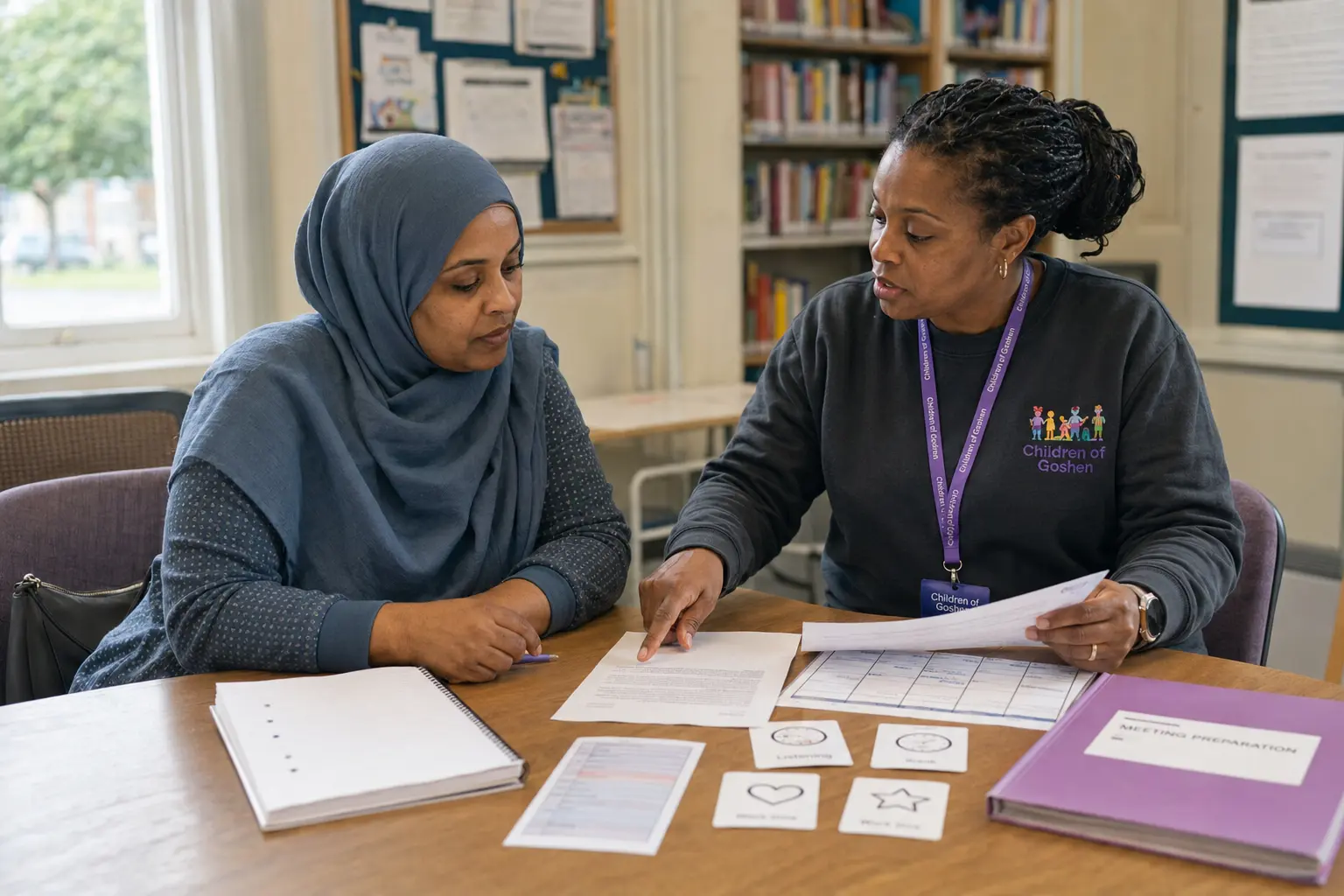
Practical SEND information in a trusted community spacePrepare for SENCO, EHCP and review meetingsPeer connection and room to breathe
What happens when you come
Bring the letter. Leave with the next step.
You may be new to the UK, unfamiliar with education law, unsure whether to speak to a teacher, SENCO, local authority or health professional, or simply exhausted from repeating the same story. Start with what is in front of you. We will help organise it.
1
Understand. We read the situation with you in plain language: the letter, decision, unmet need or breakdown in communication.
2
Map the route. We identify the likely next conversation—SEN support, reasonable adjustments, EHCP assessment, annual review, placement review, alternative provision or EOTAS questions.
3
Prepare. We help you organise evidence, priorities and questions for the SENCO, school, local authority or relevant professional.
4
Act and follow up. You leave with named actions, who is responsible and when to check progress. Where specialist advice is needed, we make a warm referral rather than handing over a generic list.
01
SEND navigation
Plain-English explanations of education terms, roles, decision points and current routes.
02
Meeting and evidence preparation
Organise questions, records, family priorities and the child’s voice before a school, EHCP or placement meeting.
03
Culturally responsive access
Make space for language, migration experience, cultural understanding and confidence in approaching authority. We can help identify interpretation or specialist support where needed.
04
Warm specialist referrals
Connect to appropriately qualified legal, financial, welfare, immigration or community services when the issue falls outside our role. The Village does not provide regulated advice.
05
Workshops and breathing space
Join practical sessions, community events and conversations with families who understand the pressure of raising a child with additional needs.
Child+Family+Education+Specialists+Community
The child remains at the centre. The Village supports understanding and action; it does not replace a SENCO, local authority, legal adviser, regulated financial adviser, clinician or advocate.
A professional referral should explain why support is required, what the learner should achieve, how the home school or local authority will remain involved, how the service fits the wider education package and what evidence is needed at review.
Start with the minimum information. We first consider the broad request, likely route and suitability. Detailed reports or sensitive records should only be shared later through an approved secure process if they are needed.
Route 01
Family support enquiry
For a parent or carer who wants help understanding a child or young person’s educational situation and possible next steps.
Common questions
Before you enquire.
Clear boundaries protect families, learners, commissioners and practitioners.
Does a child need an EHCP to ask for support?
No. Families can ask about part-time tutoring, mentoring, re-engagement, Functional Skills, sensory-informed support or The Village without an EHCP. Where a school or local authority commissions support, the learner’s SEN support, relevant EHCP outcomes and the commissioner’s responsibilities should be considered.
Is The Children of Goshen a school?
No. The Children of Goshen is a part-time SEND tutoring, mentoring, sensory and family-support provider. We work alongside a child’s school, college, home-education programme or local-authority-arranged education package and do not provide a full-time replacement for school.
Do you provide full-time alternative provision?
No. We may deliver a defined part-time tutoring, mentoring or sensory-support element for a learner whose wider arrangement includes school, alternative provision or EOTAS, but we do not act as the learner’s full-time school or provide all or substantially all of their education.
How do you protect the part-time service boundary?
We consider the hours requested for each learner, the number of weeks, the time of day, the education received elsewhere and who remains responsible. If a request could make our service the child’s main or full-time education, it is not accepted within this model and must be considered through an appropriate registered or local-authority-arranged route.
What is EOTAS and can a private provider approve it?
Education Otherwise Than At School (EOTAS) is a statutory arrangement made by a local authority under section 61 of the Children and Families Act 2014 where it would be inappropriate for the special educational provision in an EHCP to be delivered in a school or college. A private provider cannot approve an EOTAS arrangement.
Who remains responsible for the learner’s wider education?
Responsibility depends on the legal arrangement. A commissioning school or local authority retains the responsibilities that apply to it, including oversight of commissioned off-site support. In elective home education, the parent remains responsible for securing suitable full-time education. Our role and reporting arrangements are agreed in writing before support begins.
How is progress measured?
The agreed plan should state what will be monitored. This may include attendance, engagement, curriculum work, literacy or numeracy progress, communication, Functional Skills, independence, regulation, learner voice and feedback from families or referrers.
Can a sensory room be used without a full programme?
Families and professionals can ask about independent room use or practitioner-led sessions. Purpose, suitability, supervision, access needs, terms and availability must be agreed before a booking is confirmed.
Evidence and official sources
Check the source material.
Research and policy summaries are provided for general information, not as legal advice.